
14/10/2026
If you live, work, rent, or run a business around Green Lanes in Harringay, rubbish has a habit...
This Privacy Policy explains how Waste Disposal Harringay collects, uses, shares and protects personal data in connection with our waste disposal and related services. It applies to all Waste Disposal Harringay customers and prospective customers located in the Harringay area, as well as individuals who contact us or interact with us in any way in relation to our services.
We are committed to complying with the UK General Data Protection Regulation UK GDPR, the Data Protection Act 2018 and all other applicable data protection laws. This Privacy Policy is intended to provide clear and transparent information about our data practices and about your rights.
The data controller responsible for your personal data is Waste Disposal Harringay. We determine the purposes and means of processing personal data in connection with our services.
If you have any questions about this Privacy Policy, or if you wish to exercise any of your data protection rights, you can contact us using the contact details provided on our main customer documents or through the usual communication channels you use with us.
We may collect and process the following categories of personal data in the course of operating our business and providing services in the Harringay area:
Identification and contact details such as name, address, email address, telephone number and any other contact information you choose to provide when you request a quote, make a booking or communicate with us.
Service and contract information such as details of the services requested or provided, service addresses, preferred dates and times, access information you choose to share, billing information and records of our communications with you.
Payment and transaction data such as payment amounts, dates, invoice details and payment status. We do not store full card numbers or security codes when payments are processed by external payment providers.
Communications and correspondence such as emails, telephone call notes, messages sent through contact forms or messaging tools and any feedback, complaints or reviews that you submit to us.
Technical and usage information such as basic technical data provided by your device when you interact with our website or online tools, including IP address, browser type and general usage information that allows us to maintain and improve our online services.
Where you provide personal data relating to another person, for example another contact at the service address, you are responsible for ensuring that the individual is aware of this Privacy Policy and that you have a lawful basis to share their details with us.
We process personal data only when we have a lawful basis under the UK GDPR. The main purposes and legal bases are as follows:
To provide waste disposal and related services. We use your data to create and manage bookings, plan collections, issue invoices, administer payments and deliver customer support. The lawful basis is usually performance of a contract or steps taken at your request before entering into a contract.
To communicate with you. We contact you about service arrangements, changes, queries, complaints and customer care matters. The lawful basis is performance of a contract, our legitimate interests in managing our business and, where necessary, your consent.
For billing, payments and accounting. We process transaction information to manage our accounts, calculate charges and comply with financial and tax obligations. The lawful basis is performance of a contract and compliance with legal obligations.
To improve and manage our services. We may use data to monitor service quality, train staff, enhance our processes and maintain the security and performance of our systems. The lawful basis is our legitimate interests in operating and improving our business in the Harringay area.
For marketing and service updates. Where permitted, we may use your contact details to send you information about our services or related offers that may be of interest in the local area. The lawful basis is our legitimate interests, except where consent is required. You can opt out of marketing communications at any time.
To comply with the law and protect our rights. We may process data to meet legal requirements, respond to lawful requests from authorities, prevent fraud and protect our rights, property or safety or the rights, property or safety of others. The lawful basis is compliance with legal obligations and our legitimate interests.
We do not sell your personal data. We share data only where necessary, with appropriate safeguards in place, for the purposes set out in this Privacy Policy.
We may share personal data with trusted third party service providers who act as data processors on our behalf. These may include providers of payment processing, IT and cloud services, customer relationship management tools, email or messaging platforms and professional advisers such as accountants. These processors are contractually required to process personal data only in accordance with our instructions, to keep it secure and to comply with applicable data protection laws.
Where required, we may also share data with public authorities, regulators, law enforcement bodies or courts when we are legally obliged to do so or when it is necessary to protect our legal rights.
If any data is transferred outside the United Kingdom or European Economic Area, we will ensure that appropriate safeguards are in place, such as adequacy decisions or standard contractual clauses, in accordance with data protection laws.
We keep personal data only for as long as necessary to fulfil the purposes for which it was collected, including to meet legal, accounting or reporting requirements.
In general, customer account, contract and billing information is kept for the duration of your relationship with Waste Disposal Harringay and for a number of years after the end of the relationship to comply with tax and accounting rules and to enable us to respond to any queries or disputes. Communications and operational records may be kept for a similar period to support our business operations and demonstrate compliance.
Where data is no longer needed, we will delete it or anonymise it in a secure manner so that it can no longer be linked to an identifiable individual.
Under the UK GDPR and other applicable laws, individuals in the Harringay area have a number of rights in relation to their personal data. These rights are subject to certain conditions and exemptions, but we will always respond to any request in accordance with the law.
Right of access. You have the right to request confirmation of whether we process your personal data and to obtain a copy of the data, together with certain information about how it is used.
Right to rectification. You can ask us to correct or complete any personal data that is inaccurate or incomplete.
Right to erasure. In some circumstances, you can request that we delete your personal data, for example where the data is no longer needed for the purposes for which it was collected or where you withdraw consent and there is no other lawful basis for processing.
Right to restriction of processing. You can request that we restrict the processing of your personal data in certain situations, for example while we are considering a request to rectify or erase your data.
Right to data portability. Where processing is based on your consent or on a contract and is carried out by automated means, you may have the right to receive your personal data in a structured, commonly used and machine readable format and to transmit it to another controller.
Right to object. You can object to certain types of processing, including processing based on our legitimate interests and processing for direct marketing. If you object to direct marketing, we will stop this processing.
Right to withdraw consent. Where we rely on your consent as the legal basis for processing, you have the right to withdraw that consent at any time. This will not affect the lawfulness of processing carried out before consent was withdrawn.
To exercise any of these rights, please contact us using our usual contact channels. We may need to verify your identity before responding to your request. We aim to respond within one month, or within any other timeframe required by law.
You also have the right to lodge a complaint with the UK Information Commissioners Office if you believe that your data has been processed in a way that does not comply with data protection law. We would, however, appreciate the chance to deal with your concerns first, so please contact us in the first instance.
We take appropriate technical and organisational measures to protect personal data from unauthorised access, accidental loss, destruction or damage. Measures may include access controls, staff training, secure storage, encryption where appropriate and regular review of our security practices.
While we take reasonable steps to protect your personal data, no system can be completely secure. You are responsible for keeping any account details or passwords confidential and for notifying us promptly if you suspect any unauthorised use of your personal data in connection with our services.
We may update this Privacy Policy from time to time in order to reflect changes in our services, in the way we process personal data or in applicable laws and regulations. Any updated version will apply to all Waste Disposal Harringay customers and contacts in the Harringay area from the date it is made available.
We encourage you to review this Privacy Policy periodically so that you remain informed about how we use and protect your personal data.

GET A FREE QUOTE
Too sick to move junk? Our team is here to help you out!
We provide high standard waste dsiposal Harringay services at very competitive prices.
 Tipper Van - Rubbish Removal and Builders Waste Disposal Prices in Harringay, N4
| Space іn the van | Loadіng Time | Cubіc Yardѕ | Max Weight | Equivalent to: | Prіce* |
| Minimum Load | 10 min | 1.5 | 100-150 kg | 8 bin bags | £90 |
| 1/4 Load | 20 min | 3.5 | 200-250 kg | 20 bin bags | £160 |
| 1/2 Load | 40 min | 7 | 500-600kg | 40 bin bags | £250 |
| 3/4 Load | 50 min | 10 | 700-800 kg | 60 bin bags | £330 |
| Full Load | 60 min | 14 | 900-1100kg | 80 bin bags | £490 |
*Our rubbish removal prіces are baѕed on the VOLUME and the WEІGHT of the waste for collection.
 Luton Van - Rubbish Removal and Builders Waste Disposal Prices in Harringay, N4
| Space іn the van | Loadіng Time | Cubіc Yardѕ | Max Weight | Equivalent to: | Prіce* |
| Minimum Load | 10 min | 1.5 | 100-150 kg | 8 bin bags | £90 |
| 1/4 Load | 40 min | 7 | 400-500 kg | 40 bin bags | £250 |
| 1/2 Load | 60 min | 12 | 900-1000kg | 80 bin bags | £370 |
| 3/4 Load | 90 min | 18 | 1400-1500 kg | 100 bin bags | £550 |
| Full Load | 120 min | 24 | 1800 - 2000kg | 120 bin bags | £670 |
*Our rubbish removal prіces are baѕed on the VOLUME and the WEІGHT of the waste for collection.
If you live, work, rent, or run a business around Green Lanes in Harringay, rubbish has a habit...

If you have ever seen a black bag left beside a wall, a broken wardrobe dumped near a kerb, or...
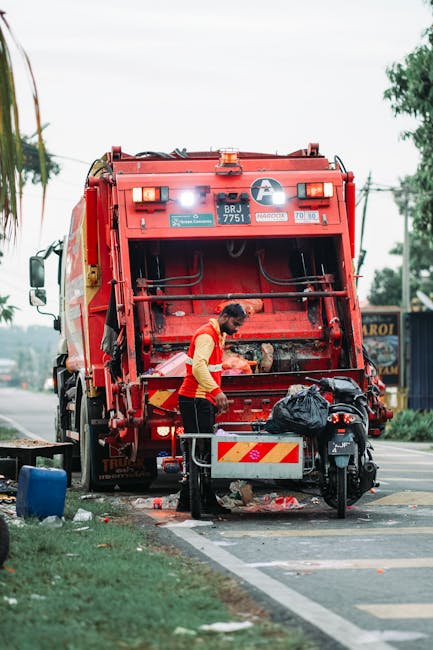
If you are planning a clear-out in Haringey, one of the first questions that comes up is simple...

If you live, rent, run a business, or manage a property in Harringay, the Haringey council rules...
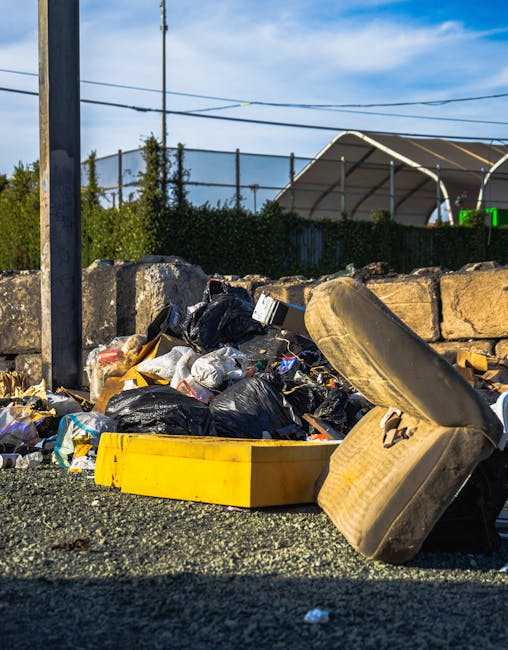
If you are arranging a rubbish clearance in Harringay, the booking stage can make or break the...

If you live in Harringay and your home is one of those charming places with a tight hallway, a...

If you need waste gone quickly, the last thing you want is a messy, drawn-out process.

If you are trying to sort Bulky rubbish pickup near Turnpike Lane station Harringay, you are...

If you have ever booked a bin or rubbish collection and then watched the final bill creep up, you...
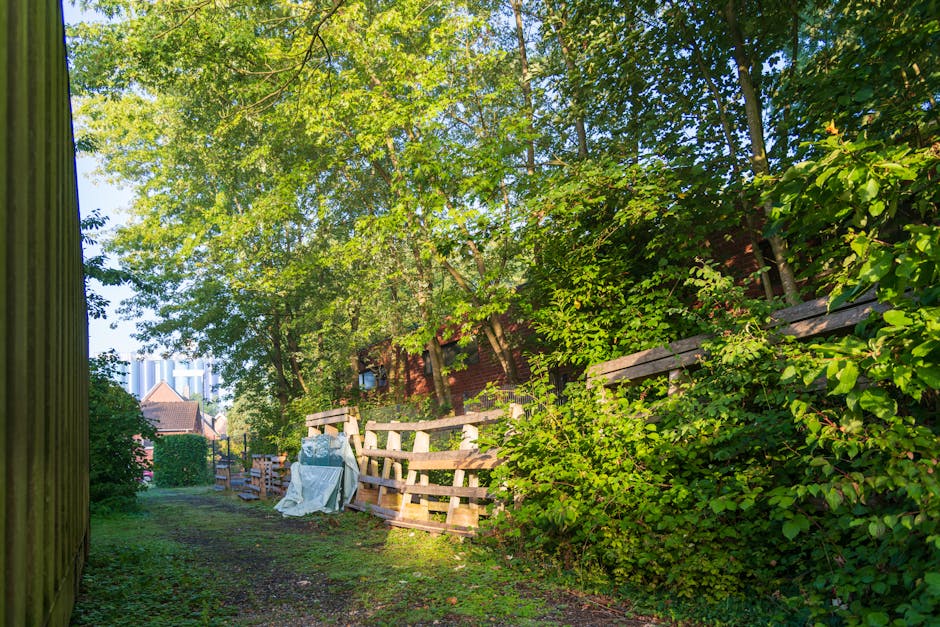
If you've got a pile of hedge trimmings, lawn clippings, branches, old soil bags, or that...

Moving out is busy enough without staring at a flat full of leftover furniture, broken bits, old...

Buying a property in Harringay, a vibrant area in North London, can be an exciting yet daunting...

 (82)
(82)